| Bakhurina N. N. and Unwin D. M., 1995, The evidence for 'hair' in Sordes and other pterosaurs, Journal of Vertebrate Paleontology 15(3, Suppl.): 17A |
More recently, the model of pterosaur body hair has been refined, following fossil finds of better quality preservation and improved ovservational techniques.
| Yang Z., Jiang B., McNamara M. E., Kearnes S.
L., Pittman M., Kaye T. G., Orr P. J., Xu X. and Benton M. J., 2019,
Pterosaur integumentary structures with complex feather-like branching,
Nature Ecology & Evolution, 2018; 3 (1): 24 D'Alba L., 2019, Imaging of pterosaur skin reveals evidence of coloured feather-like structures, but whether these are homologous with true feathers is open to debate, Nature Ecology & Evolution volume 3, pages12-13 |
The general findings show that Anurognathid pterosaurs have 4 different types of hair-like structures, similar in form to the primative feather structures found on some dinosaurs. Is is also the case that evidence for melanosomes suggest a red and black pigment structure resulting in a probable brownish colouration to the feathering.
The feather structures have been observed on Anurognathus, Jeholopterus, Sordes and Pterorhynchus and may also have been present on many more pterosaurs.
 |
Type
1- Pycnofibers This type of fibre is found to be a hair like structure with a hollow centre. There hairs are found in association with many areas of the skin of pterosaurs and similar structures are found in some dinosaurs. They would have been able to insulate to protect against heat and cold. |
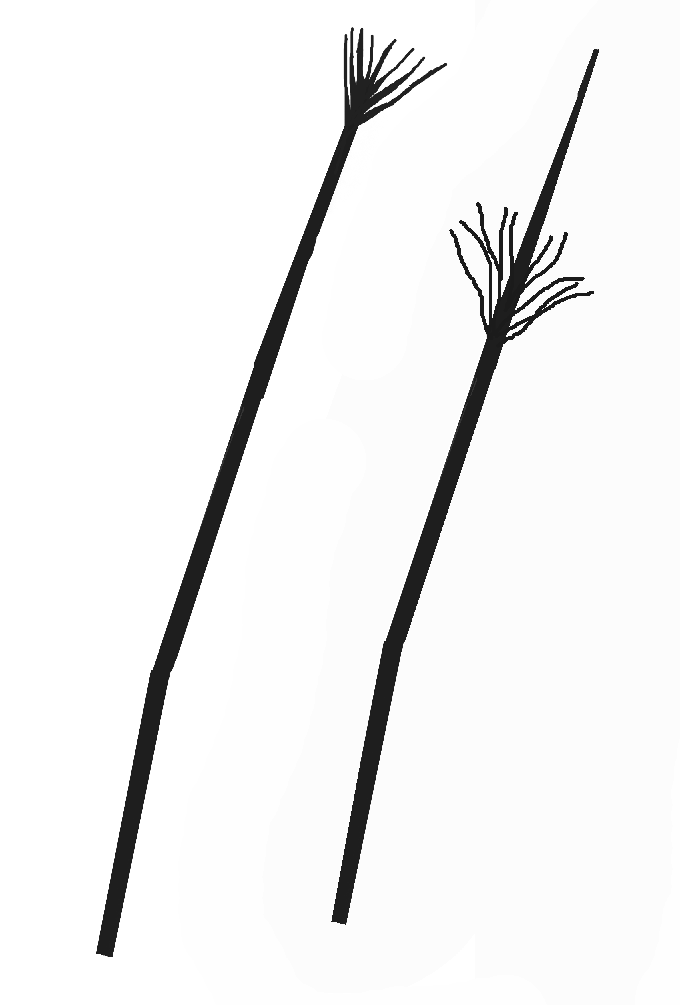 |
Types 2
and 3 - Radially and symetrically branching feathers Found on the head, neck and limbs. These feathered hairs probably had streamlining and insulating properties. |
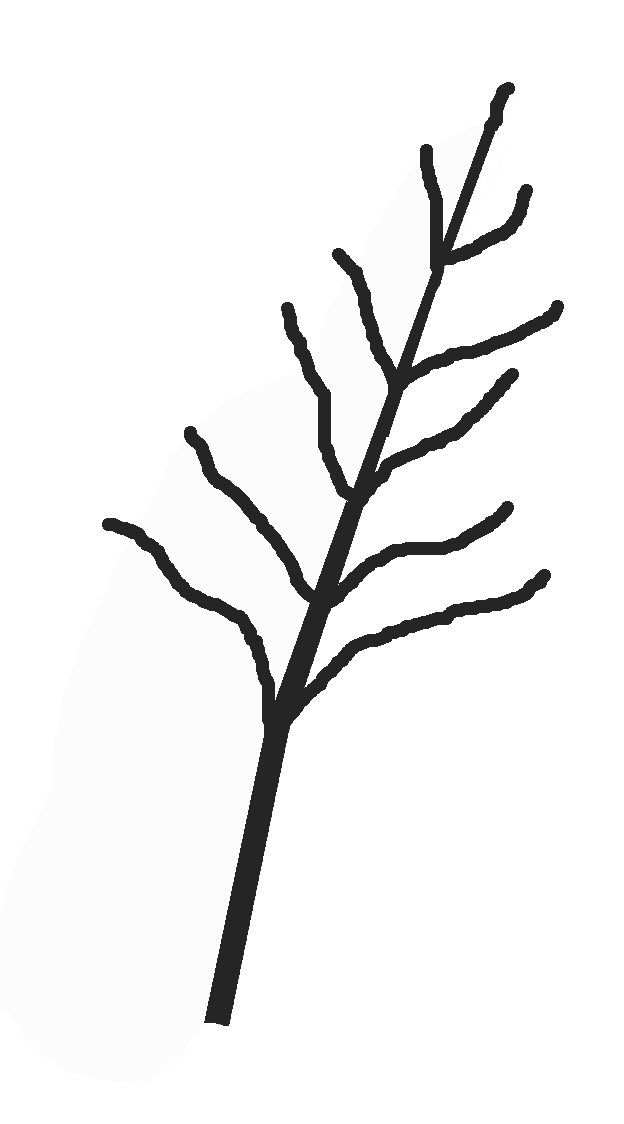 |
Type 4 -
Bilaterally branching feathers These are wing fibres and they were most likely able to laminate airflow over the wings. In birds, the contour wing feathers are sensory and able to detect a localised wing stall. These feathers may also have been capable of sensing airflow changes over the wings. |